



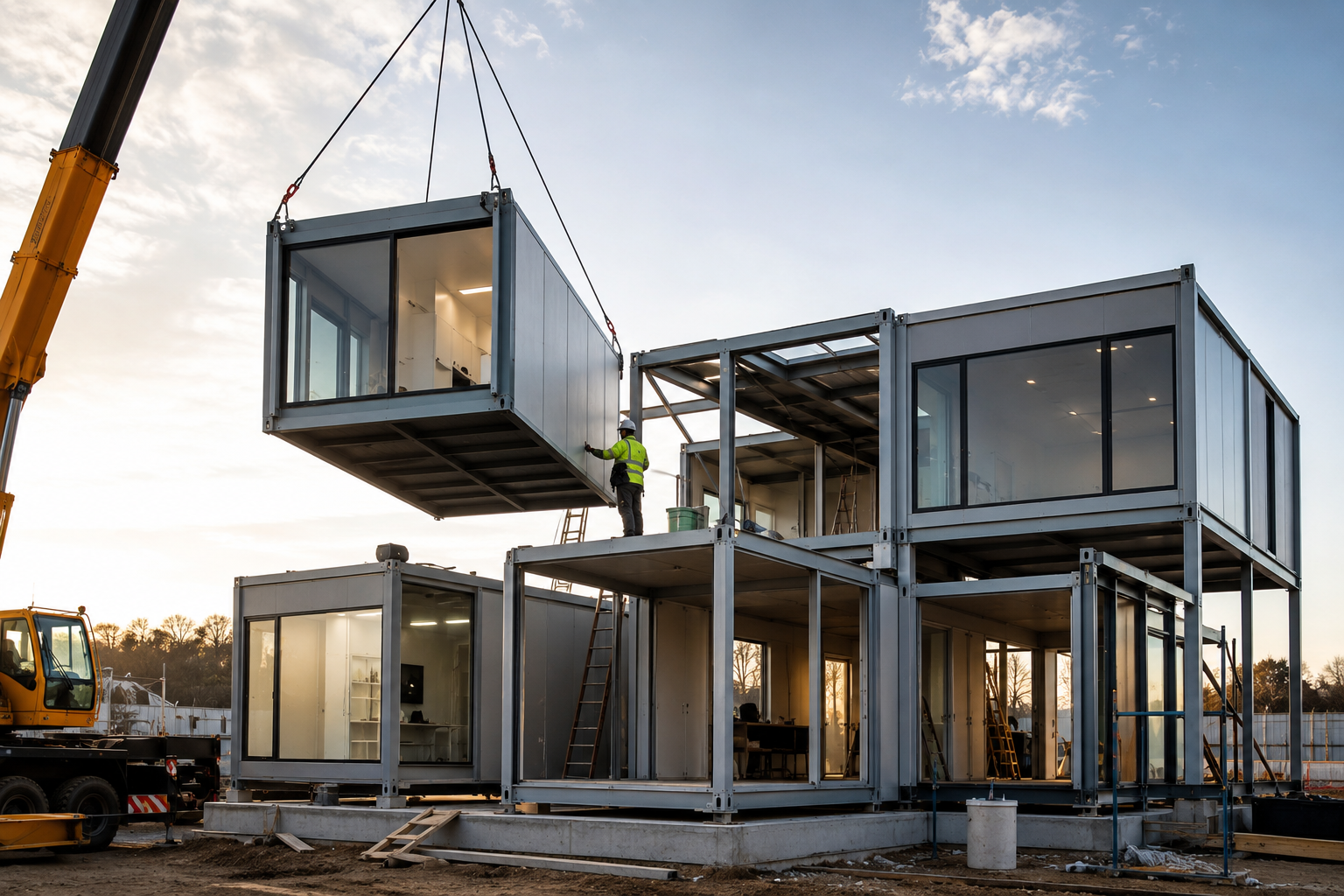
Traditional construction is increasingly facing competition from a model that delivers exactly what every project needs: speed, cost control, and fewer unexpected setbacks. We’re talking about modular metal construction, a system that is gaining traction in sectors as varied as healthcare, education, residential, and offices.
What does modular metal construction involve?
It’s simple: instead of building a structure from scratch on-site, the modules are manufactured and assembled in a workshop, under controlled conditions, and transported to their final location almost fully finished. All that’s left on-site is to join, connect, and install them. The result is a project that moves forward on two fronts at once — while the site is being prepared, the structure is already being built elsewhere.
Why this demand is growing
The momentum is coming from several directions at once. Office, education, hospital, and housing projects are all looking to shorten delivery times without compromising on quality or technical regulations. Modular construction meets that need: assembly times are significantly shorter than with conventional building systems, and workshop-based manufacturing reduces setbacks such as bad weather or on-site labor shortages.
On top of that, there’s a strong economic argument: by optimizing processes and minimizing waste, construction costs come down, something especially appealing in sectors where budgets and timelines are extremely tight, such as public healthcare or education.
Metal takes center stage
Steel and aluminum are the natural materials for this type of construction, as they offer the structural strength needed to withstand transport and assembly, adapt to different geometries, and allow for much stricter quality control than traditional building methods. Because everything is manufactured in a closed, controlled environment, every phase of the project is overseen by specialists and technical teams themselves.
What’s more, a modular metal structure doesn’t have to compromise on design: finishes, colors, and configurations can be customized just as much as in any other project, without losing the benefits of prefabrication. This is an aesthetic advantage, as the result can be tailored more closely to the client’s original vision.
A trend on the rise
As delivery times become an increasingly decisive factor for developers and public administrations, modular metal construction is moving beyond a niche alternative to become a real option within industrial and facilities construction.
This construction method is currently experiencing strong growth, and, as forecast, this upward trend is expected to continue, driven above all by the advantages it offers compared to other construction options.
RECENT COMMENTS