



COLD ROLLING COMBINES PRECISION, EFFICIENCY, AND VERSATILITY TO MANUFACTURE CUSTOM METAL PROFILES.
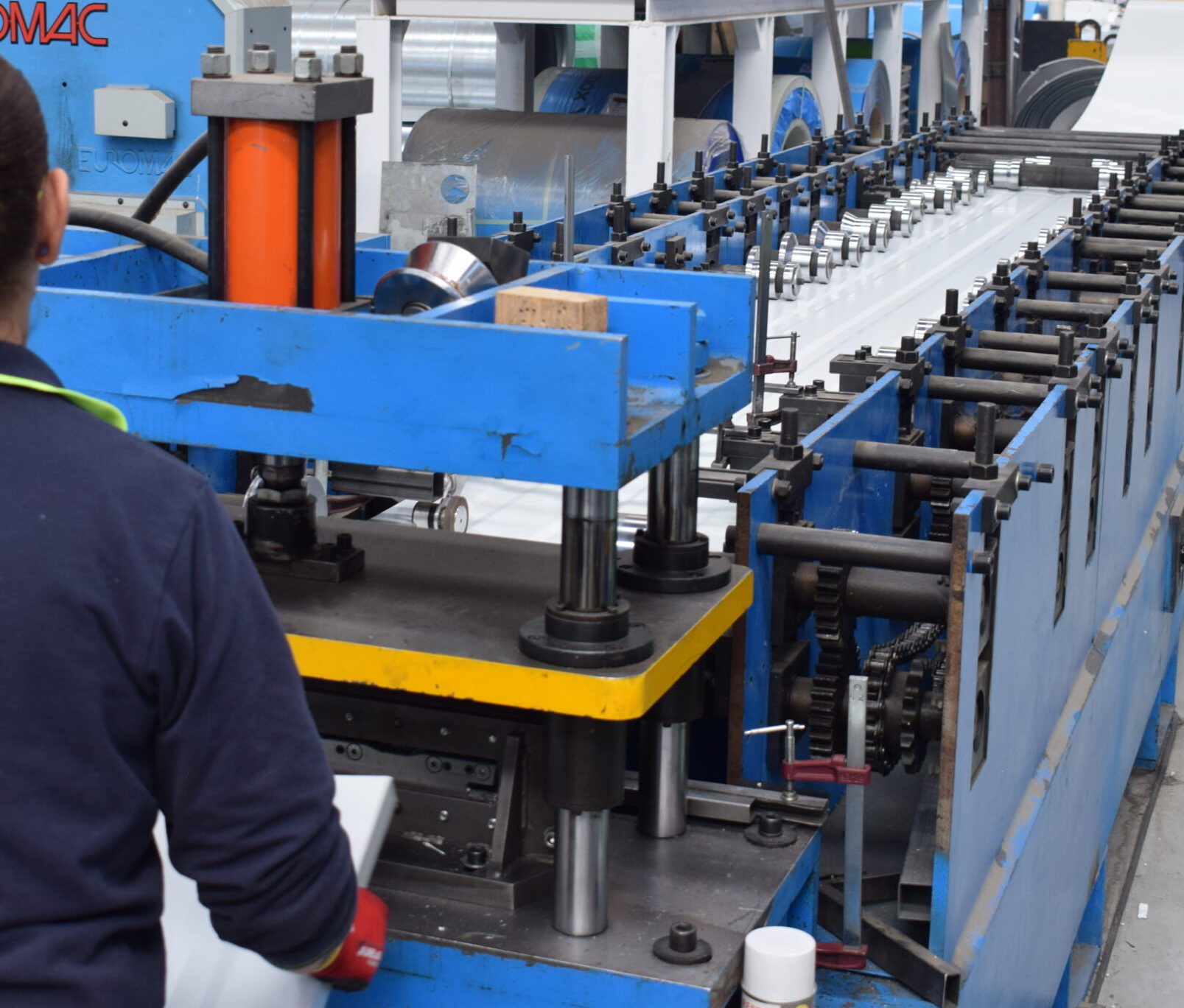
METAL PROFILES THROUGH COLD ROLLING
When a project requires precise, repeatable metal profiles with a uniform finish, cold rolling becomes one of the most efficient solutions. This process transforms sheet metal into profiles of different shapes and dimensions through progressive deformation of the material, producing parts ready for integration into building systems, enclosures, lightweight structures, or industrial applications.
At Jinka Diseño, we manufacture cold-rolled profiles tailored to each customer’s needs, combining expertise in metal transformation, production capacity, and custom manufacturing. The result is parts with high dimensional precision, optimized material use, and an excellent balance of strength, functionality, and manufacturing cost.
WHAT IS COLD ROLLING?
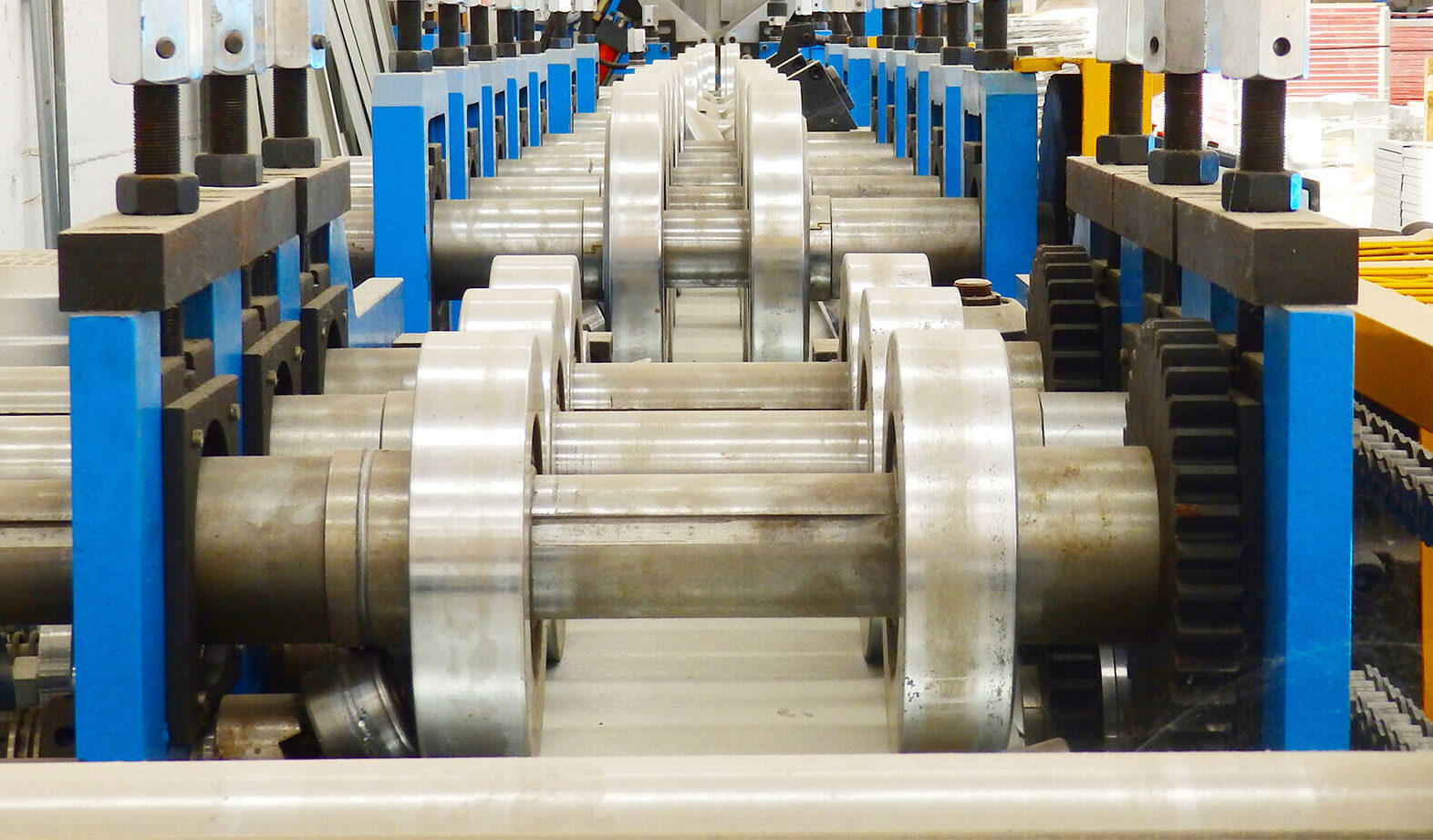
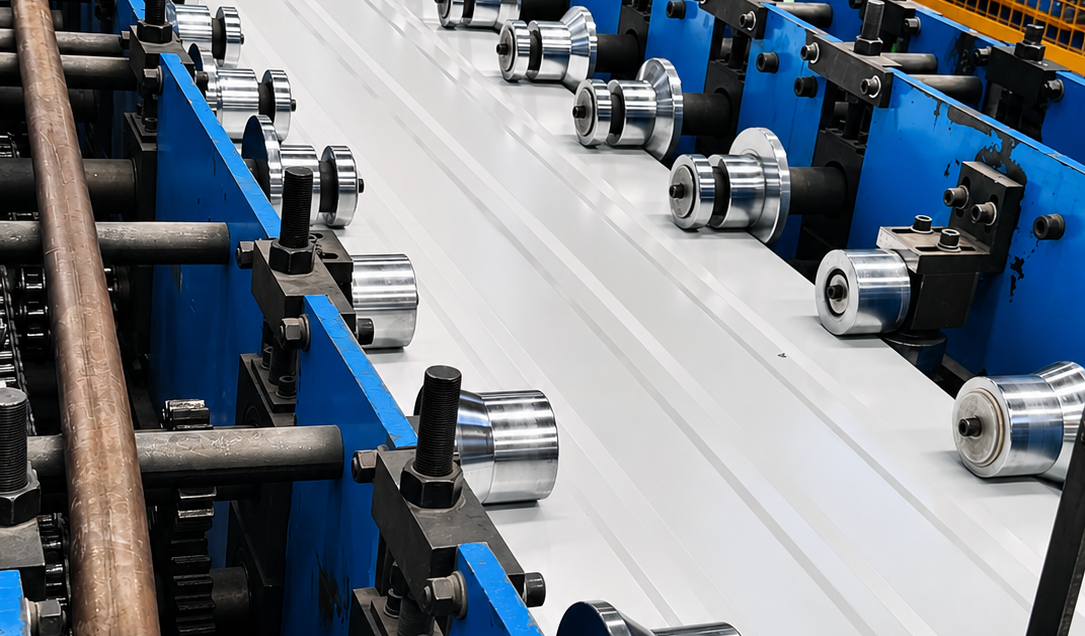
Cold rolling is a metal forming process that transforms a metal strip or sheet by passing it progressively through a series of rollers that gradually shape it, without applying heat. Thanks to this system, it is possible to manufacture profiles with complex geometries, precise dimensions, and great uniformity throughout the entire piece.
This process makes it possible to obtain metal profiles continuously and efficiently, adapting to different thicknesses, materials, and configurations depending on each project’s needs. Its versatility makes it a widely used solution
in sectors such as construction, industry, storage, machinery manufacturing, or technical installations.
advantages
Dimensional precision
Material optimization
Excellent surface finish
Wide range of applications
APPLICATIONS OF COLD ROLLING
01.
CONSTRUCTION AND BUILDING

The versatility of cold rolling allows the manufacturing of metal profiles for a wide variety of sectors and applications. Thanks to the ability to adapt the geometry, dimensions, and thickness of each profile, this process is used both in industrial projects and in construction solutions where precision, strength, and continuity in production are required.
02.
The manufacturing of shelving units, storage rooms, lockers, and other storage solutions requires metal profiles with precise dimensions and high repeatability. Cold rolling makes it possible to produce these components efficiently and uniformly.
03.
Doors, enclosures, frames, lightweight structures, and other metal elements can incorporate profiles manufactured through cold rolling, achieving precise finishes and excellent dimensional stability.
04.
FURNITURE AND TECHNICAL EQUIPMENT
This process is also used in the manufacturing of metal furniture, display stands, modular systems, and technical equipment, where part uniformity is essential to ensure precise assembly and a quality result.
05.
CUSTOM PROJECTS
In addition to standardized applications, cold rolling allows the development of custom profiles for specific projects, adapting the section, thickness, and technical characteristics to each customer’s particular needs.
OUR MANUFACTURING PROCESS
Technical study and definition
Material preparation
Cold lamination
Cutting and complementary machining
Verification and quality control
Preparation and delivery
FAQS
Cold lamination can be carried out on various metal materials, such as galvanized steel, pre-painted steel, aluminum, or stainless steel, among others. The choice will depend on the technical, aesthetic, and strength requirements of each project.
Yes. One of the main advantages of this system is its adaptability. Custom profiles can be developed for construction, industrial, or storage projects, tailoring the design to the customer’s needs.
Cold rolling stands out for its dimensional precision, repeatability, material efficiency, and ability to produce profiles continuously. It also delivers uniform finishes and efficient manufacturing for series of different sizes.
Yes. At Jinka Diseño, we work with both standardized profiles and custom developments. We can manufacture profiles based on drawings, samples, or technical specifications provided by the customer, adapting production to the specific requirements of each project.